
Table of Contents
ToggleA pink spot on your nose that keeps scabbing over is easy to blame on a pimple. Because it isn’t sore, many of us simply leave it alone. But a spot that won’t settle deserves a closer look. Many skin spots are harmless, but only a doctor can tell which ones.
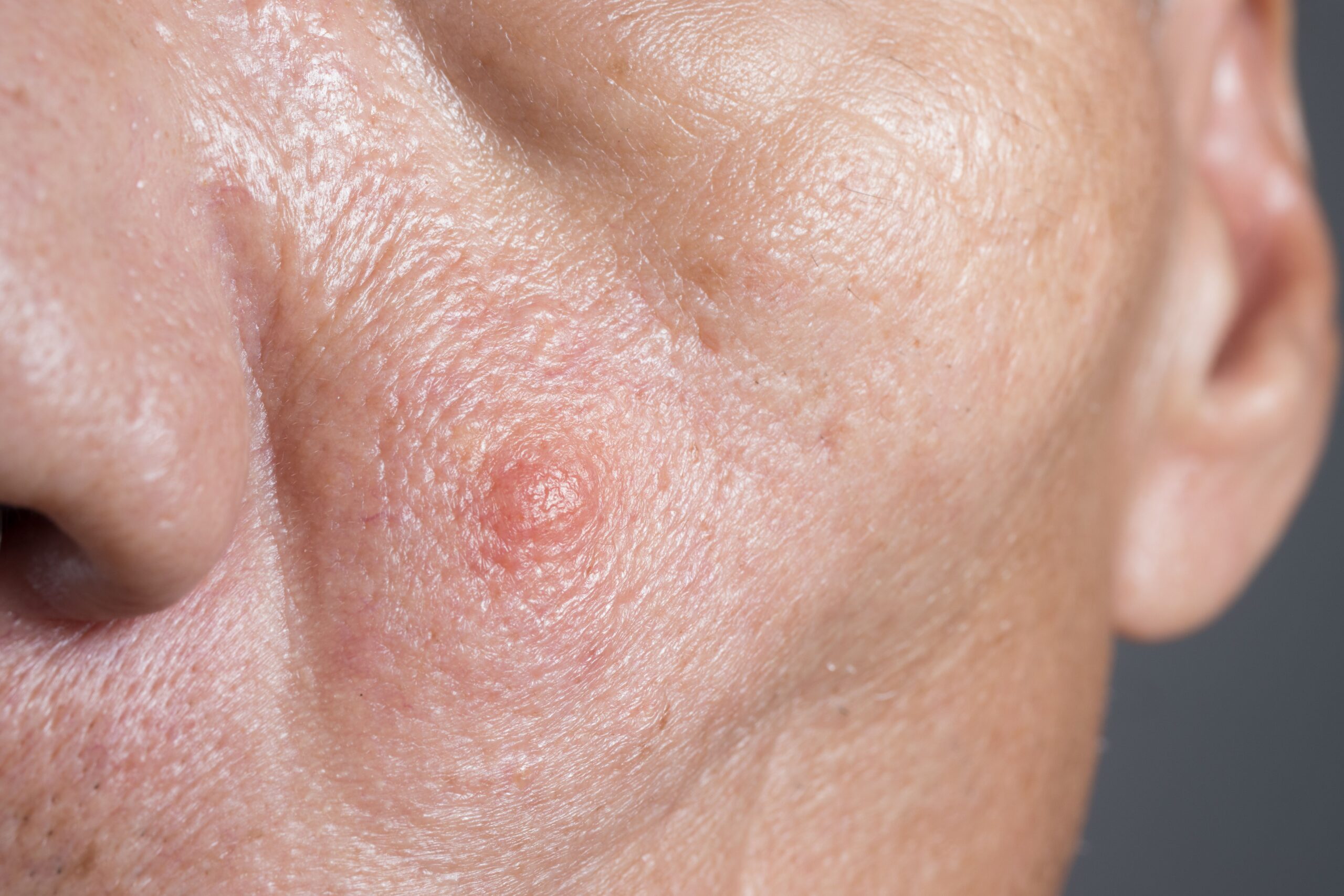
So, what does basal cell carcinoma look like, and when should you show your GP?
This guide covers the common signs, how they can differ between people, and what to do next.
What Is Basal Cell Carcinoma?
Basal cell carcinoma, or BCC, is a type of skin cancer. Cancer Council Australia says it starts in the basal cells in the lower layer of your outer skin. You may also see it called basal cell skin cancer.
About two out of three skin cancers are BCCs. That makes it the most common of the three main types, alongside squamous cell carcinoma and melanoma.
BCCs usually appear on skin that gets a lot of sun, such as the face, neck, back, and shoulders. They also grow slowly, so it can take time to notice one, as healthdirect explains. That slow pace is one reason a BCC can be easy to overlook.
What Does Basal Cell Carcinoma Look Like on Your Skin?
There’s no single look because BCCs can appear in different ways. Cancer Council Australia describes them as red, pink, purple, or pearly. They can be flat, raised, or scaly, and may form an open sore, bleed, or weep. Healthdirect lists these common basal cell carcinoma symptoms:
- A pink or pearly bump: this is the nodular type, which is the most common.
- A flat, pink, scaly patch: this superficial type may be mistaken for a rash or eczema.
- A sore that doesn’t heal: it may also heal and then get worse again, and it may bleed.
- A mole, scar, or rash that bleeds: even a spot you already know can change.
These signs overlap with everyday skin problems, so a familiar-looking spot can still turn out to be BCC skin cancer. That’s why Cancer Council Australia encourages regular checks for new or changing spots.
How Does Basal Cell Carcinoma Look on Darker Skin?
On darker skin, a BCC is more likely to be pigmented, as Medicine Today explains for GPs. That means it may look darker and can be hard to tell apart from other dark spots. Darker skin has more natural protection from UV (ultraviolet) radiation.
Skin cancer can still happen, though, says Cancer Council Victoria. So any new or changing spot is worth showing a doctor, whatever your skin tone.
How Is Basal Cell Carcinoma Different From Squamous Cell Carcinoma?
Squamous cell carcinoma (SCC) is the other common skin cancer that isn’t melanoma, and the two can look alike. Cancer Council Australia describes SCC as red, pink, or scaly, and thick or crusted. It may also bleed or form an open sore. Melanoma, the third type, is described as having uneven colour or an irregular shape or border.
Harmless spots, such as freckles and ordinary moles, can look similar. Sunspots (solar keratosis) are listed as a warning sign. Pictures can help you know what to look for, but only an examination can tell these spots apart.
What Can Raise the Chance of Basal Cell Carcinoma?
Sun exposure plays a big part, which is why BCCs usually appear on sun-exposed skin. Healthdirect lists other risk factors too.
They include pale skin, a family history of skin cancer, a weak immune system, and radiation or arsenic exposure.
Protecting your skin can help as well. When the UV index is 3 or above, Cancer Council Australia suggests five steps: slip, slop, slap, seek, and slide. That means clothing, sunscreen, a hat, shade, and sunglasses.
When to See a GP About a Skin Spot
Cancer Council Australia advises talking to your doctor about any spot that changes size, shape, or colour. The same goes for a spot that itches or bleeds. A sore that won’t heal, or one that heals and then returns, deserves a check too. You don’t have to decide yourself whether a spot is serious, because that’s what a check is for.
Our skin and mole checks may suggest a full body skin check in several situations. Examples include a spot you’re unsure about or a past skin cancer. A family history of melanoma, past solarium use, and fair skin that burns easily are on the list too.
The independent doctors at High Street Medical Clinic can look at a spot of concern and explain what comes next. Healthdirect notes that a GP may treat a BCC or refer you to a dermatologist.
In an emergency, call 000. When the clinic is closed, Doctor Doctor offers after-hours home visits for non-emergency care on 13 26 60.
Where to Start With a Skin Check in Prahran
So, what does basal cell carcinoma look like? It can be a pink, pearly, or scaly spot, or a sore that keeps returning. It can also look different from person to person. Any new or changing spot is worth showing a doctor.
For a skin check in Prahran, you can learn about skin and mole checks at High Street Medical Clinic. Fees may apply, so see our fees before you book or ask our reception when you set an appointment.
When you’re ready, you can book online or call (03) 9510 5500.
Frequently Asked Questions
Sometimes it can. Healthdirect says the flat, scaly type, called superficial BCC, may be mistaken for a rash or eczema. A patch that doesn’t heal, or that heals and then returns, is worth showing a doctor.
Only an examination can confirm what it is.
No, they are different types of skin cancer. BCC starts in the basal cells. Cancer Council Victoria says melanoma starts in the melanocytes, which are the cells that make skin pigment. Healthdirect describes BCC as usually the least dangerous type of skin cancer.
Either way, a doctor needs to examine a spot to tell them apart.
It’s possible. Cancer Council Australia says having had one BCC increases the risk of developing another.
That’s why ongoing skin checks are worth discussing with your doctor, especially if you notice a new or changing spot. Your doctor can advise what suits you.
Yes. Our skin and mole checks page says you can book if a few spots concern you. You can also book a routine full-body skin check. Your doctor will talk through any findings and next steps with you.
Healthdirect says BCCs are usually curable, and there are many treatment options. Which one suits you depends on things like the type of BCC.
A GP may treat it or refer you to a dermatologist. Results vary between people, so talk to your GP about what is right for you.