

Table of Contents
ToggleIs there one list of travel vaccines that suits every trip? Not quite. The Australian Immunisation Handbook says there’s no single correct list for any country. The right vaccines depend on you, your health, and your plans.
If you’re heading overseas, this guide covers which travel vaccines doctors commonly consider and where to get them. It also explains how early to plan.
Which Travel Vaccines Do You Need?
The Handbook sorts travel vaccines into three groups:
- Routine vaccines: the ones advised for your age and health, whether or not you travel.
- Vaccines chosen for your trip: picked using your travel plans, activities, and likely risk.
- Vaccines required for entry: needed to meet health rules between countries, or a country’s entry rules, in some cases.
This can sound like a lot. A doctor will ask about more than your destination, so you don’t have to work it all out alone. The Handbook lists your age, health conditions, medicines, vaccine history, and allergies. It also lists your planned activities, whether you’ll be in cities or rural areas, and how long you’ll be away.
Routine Vaccines to Check Before You Go
Routine vaccines are easy to overlook, but the Handbook says everyone who travels should be up to date with them. Measles is a good example.
The Victorian Department of Health says measles outbreaks are occurring worldwide. These include popular destinations such as Indonesia and Thailand.
The Handbook advises the MMR vaccine for Australians born in or after 1966 who haven’t had 2 doses. MMR stands for measles, mumps, and rubella. The Handbook says the tetanus vaccine matters if you may get a wound and could be far from care. It also suggests thinking about flu and COVID-19 vaccines. You can check your vaccine history online through myGov and Medicare.
Hepatitis A, Typhoid, and Hepatitis B Vaccines
Some infections spread through food, water, or blood, and vaccines are available for three of them. Here is what the Handbook says about each:
- Hepatitis A: a virus that inflames the liver. It spreads through unsafe food or water. The Handbook advises the hepatitis A vaccine for people aged 1 year or older. This applies when you visit countries where the disease is common, including all developing countries.
- Typhoid: a bacterial infection of the intestines and bloodstream. The typhoid vaccine may be advised for people aged 2 years or older. It applies to places such as the Indian subcontinent, most Southeast Asian countries, and several South Pacific nations.
- Hepatitis B: a virus that spreads through blood or sexual contact, including during urgent medical or dental care. The vaccine is advised if you travel often or for a long time. This applies to parts of Central and South America, Africa, Asia, and Oceania.
The Victorian Department of Health advises the hepatitis A and typhoid vaccines for tourists. It says the same for people visiting friends and relatives. This applies to countries where these infections are common.
Most Australian children born since 2000 have already had the hepatitis B vaccine. The Handbook also says most people don’t need a cholera vaccine. It notes that the risk is very low if you avoid unsafe food and water.
Japanese Encephalitis and Rabies Vaccines
Japanese encephalitis is spread by mosquitoes. It is found across much of Asia and the Western Pacific. This includes eastern Indonesia and Papua New Guinea.
The Handbook advises the vaccine if you spend a month or more in affected areas. This applies during the season when the virus spreads. Shorter trips may also call for it.
Examples are travel in the wet season, lots of time outdoors, or a stay without air-conditioning, screens, or bed nets. The Handbook adds that your overall risk is likely to be low.
Rabies can spread through bites or scratches from animals. These include dogs, cats, monkeys, and bats. The Handbook advises avoiding close contact with these animals and caring for any bite or scratch straight away. A doctor weighs your chance of exposure against how quickly you could reach medical care overseas.
Having the rabies vaccine before you travel means fewer doses are needed after an exposure. It may also mean you don’t need rabies immunoglobulin. This treatment can be hard to find in many countries.
Yellow Fever Vaccine and Entry Requirements
Yellow fever is spread by mosquitoes. The Handbook says it is found only in parts of Africa and South America. The yellow fever vaccine is advised for people aged 9 months or older. It applies to anyone travelling to, or living in, an area where the virus spreads. Some countries also ask for proof of the vaccine before you can enter, even if yellow fever isn’t present there.
Your age and health matter too. The Handbook says people aged 60 or older face a higher chance of serious side effects after a first dose. Doctors weigh this against your likely exposure. Entry rules can also apply to countries you only pass through. Check each country on your route with its embassy or consulate in Australia.
The official yellow fever certificate comes from a Yellow Fever Vaccination Centre. The Handbook says only these centres can provide it. So ask about this when you book.
Staying Well Beyond Vaccines
Vaccines are only one part of travel health. The Handbook says safe eating and drinking habits are a must. These include treating water or drinking bottled water. They also include avoiding undercooked meat. It also suggests skipping raw fruit and vegetables. The exception is if you can peel them or wash them in safe water.
Insects can spread other infections too. The Handbook says malaria and dengue often cause fever in Australians returning from Southeast Asia and Oceania. For malaria, it points to barrier precautions, such as avoiding mosquito bites. It also points to medicine taken to prevent malaria. Your doctor can explain which steps suit your trip.
Where to Get Travel Vaccines
The Victorian Department of Health says you can see your GP, a travel clinic, or another vaccine provider. A visit covers more than the vaccines themselves. The Handbook says it covers your travel plans, health, medicines, past vaccines, and allergies.
Some chemists taking part in Victoria can also give certain vaccines without a doctor’s prescription first. These include hepatitis A, hepatitis B, and typhoid. This runs under the Chemist Care Now program. If you want advice on your whole trip, not just a vaccine, book a travel appointment.
Timing matters. Victoria’s Chief Health Officer advises seeing a provider at least 6 to 8 weeks before you leave. Some vaccines need more than one visit. The Handbook says to start early, so protection has time to build. Bring your vaccine records, your travel plans, and a list of your medicines.
When to See a GP
Plan a visit once your trip is booked because some vaccines need time between visits. The Handbook notes that some people have a higher chance of serious infections. These include young children, pregnant women, and people with health conditions. The same applies to people visiting friends and relatives. If that’s you, early advice matters even more.
If you feel unwell after you return, see a doctor and mention your travel. A fever, a new rash, or diarrhoea are examples. For a medical emergency, call 000. When the clinic is closed, Doctor Doctor offers non-urgent after-hours home visits on 13 26 60.
Planning Your Travel Vaccines Before You Fly
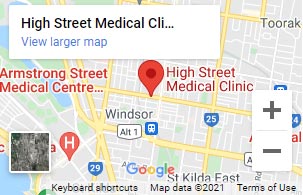
There’s no single list of travel vaccines. The right ones depend on your health, your travel plans, and the rules of each country you visit. The independent doctors at High Street Medical Clinic in Prahran offer travel advice and travel vaccinations.
High Street Medical Clinic is also a travel vaccine clinic and covers care for unwell returned travellers. Fees may apply for your vaccinations. See our fees page for more details.
To start planning, you can book a travel appointment online or call (03) 9510 5500.
Frequently Asked Questions
Can I Get Travel Vaccines Close to My Departure Date?
It’s worth asking, even at short notice. The Handbook says a doctor may consider a faster schedule for some vaccines, such as hepatitis B.
A faster schedule can mean you need another dose later. Protection also takes time to build, so earlier is easier. A doctor can tell you what’s realistic for your dates.
Do I Need Travel Vaccines for Europe or the USA?
Your routine vaccines still matter on these trips. The Handbook says measles and mumps are more common in many overseas countries than in Australia. This includes some developed countries.
It also advises MMR for Australians born in or after 1966 who haven’t had 2 doses. Checking your records before any trip is a good first step.
Do I Need Proof of Vaccination to Enter a Country?
Yes, in some cases. Some countries require proof of the yellow fever vaccine, including places that don’t currently have the disease. The Handbook says requirements can change at any time.
Confirm the rules with the embassy or consulate of each country on your route. Your doctor can record your vaccines and give you a copy to carry.
Can Children Have Travel Vaccines?
Often, but age limits differ by vaccine. The Handbook’s advice starts at 1 year for hepatitis A, 2 years for typhoid, and 9 months for yellow fever. It also suggests a lower bar for the rabies vaccine in children travelling to affected areas.
Victoria offers a free early MMR dose to infants aged 6 to 11 months. A GP can advise if it suits a planned trip. Ask your GP what suits your child.
Are Travel Vaccines Free?
Some are. The Victorian Department of Health says free MMR vaccine is available to some people. This includes those born in or after 1966 without records of 2 doses. For other travel vaccines and consultations, fees apply.
Coverage through private health insurance also varies, so check with your insurer.