

Not Feeling Quite Yourself Sometimes? You’re Not Alone.
Maybe you’ve found yourself avoiding social plans? Or, feeling unusually irritated by small things, or constantly replaying a recent conversation in your head?
Perhaps you’re getting through each day, but it feels harder than it used to.
These subtle changes can be easy to brush off, but they’re often the first signs that your mental health needs attention, and that’s where a GP can help.
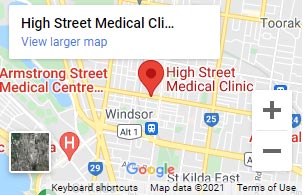
At High Street Medical Clinic in Prahran, the independent doctors offer comprehensive Mental health Services suited to our community’s busy lifestyle.
As RU OK? Day showed us, and Mental Health Month is right now, understanding what mental health really means, how to recognise when you might need support, and how professional GP care can help you feel more like yourself again.
But, you don’t need a special day or month to think about it.
What You’ll Learn Here
- What mental health actually is, and what it looks like when it’s under strain
- Real-life signs you might benefit from mental health support
- How professional GP support works and what it offers
What Mental Health Really Means
Mental health isn’t just about feeling happy or sad, it’s how you think, feel and cope with life’s ups and downs.
When your mental health is strong, you can handle stress, make decisions and maintain good relationships, even when things get busy.
Basically, strong, or good mental health allows you to analyse situations well and make good decisions. It’s about feeling equipped to manage life’s changes, big and small.
But when your mental health is struggling, the balance shifts. You might feel constantly tired, lose motivation, or notice that small challenges feel overwhelming.
Physically, you might struggle to sleep, experience tension headaches, or lose your appetite.
Emotionally, it can feel like your spark has dimmed, and your social interactions and enthusiasm aren’t what they used to be.
Everyday Signs You Could Benefit from Mental Health Support
Sometimes it’s not about a dramatic breakdown or a single stressful event. The signs can appear quietly, in day-to-day situations:
- Social events feel draining instead of enjoyable. You want to join in but can’t shake a sense of dread or discomfort.
- Conversations replay in your mind. You worry about what you said, or what someone else thought, long after it’s over. You may over-analyse, or incorrectly analyse what someone said or did when interacting with you.
- Sleep doesn’t come easily. Your mind won’t switch off, or you wake in the early hours with anxious thoughts. A future or present event may go “round and round” your thoughts.
- You’re losing patience more easily. Irritations build quickly, and you regret snapping afterwards.
- Motivation is slipping. The hobbies, exercise or routines that once felt natural now feel like hard work or a chore, or even pointless.
- You’re avoiding certain people or places. It feels easier to retreat than to meet and interact with people who you used to be ok with. It’s better to avoid them than risk an argument or negative interaction, but you still wonder what they might be saying about you.
- The festive season feels like pressure, not joy. For example, with Christmas around the corner, you want to look forward to gatherings, but instead, you feel tense about conversations and expectations.
If you recognise even one or two of these signs, you’re not alone. These moments are your mind’s way of saying it could use some support.

What GP Mental Health Support Offers
A GP appointment is often the best starting point. Many of our patients feel instantly on the right track simply by making a booking and being proactive.
Remember: You don’t need to have everything figured out, you just need to start the conversation.
At High Street Medical Clinic, GP mental health support can include:
- A thorough discussion about your symptoms, lifestyle and emotional wellbeing
- A tailored Mental Health Care Plan, which can give you access to Medicare-subsidised sessions with psychologists or counsellors
- Practical, bespoke strategies to manage stress, sleep and emotional regulation
- Ongoing support: your GP becomes part of your care team, checking in and adjusting your plan as needed
Many people are surprised to find how reassuring it feels to simply share what’s been going on with a trusted professional. Sometimes that first conversation is enough to bring clarity and direction.
Taking the First Step
There’s no need to wait until things feel worse. Talking to your GP about your mental health is a positive, proactive step, not a sign of weakness.
The independent doctors at High Street Medical Clinic are experienced in supporting patients through all kinds of life challenges, and early support can make recovery quicker and more sustainable.
If you’ve noticed changes in your mood, motivation or relationships, book an appointment and start the conversation that could help you feel better.

Extra: Something That Might Help Right Now – A Circuit Breaker
Sometimes, the quickest way to shift how you feel is to do something completely different. A short break, even two or three nights away for example, can help interrupt an unhelpful or negative routine you might be in and give you a reset.
It doesn’t need to be expensive or difficult. You might visit a friend you haven’t seen in years, take a solo trip down the coast, or simply stay somewhere new for a weekend.
The change in scenery, sounds, and pace can act as a circuit breaker, snapping you out of habits or thought loops that have started to feel heavy.